
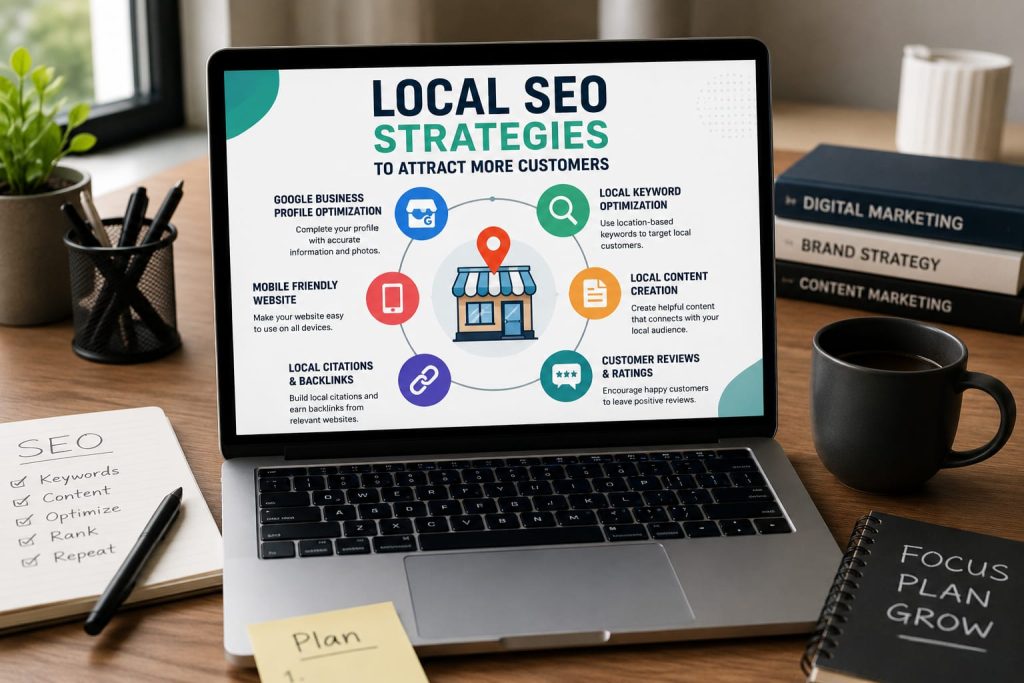
When people need a nearby business, they often search online before making a decision. They may search for a restaurant, salon, agency, shop, repair service, or other local business. This makes Local SEO an important strategy for businesses that want to attract customers from a specific location.
Local SEO helps businesses improve their visibility in location-based searches. It can make it easier for potential customers to discover a business, learn about its services, check reviews, and contact the business.
For small businesses, Local SEO can be especially useful because it focuses on reaching people who are already looking for relevant products or services in their area.
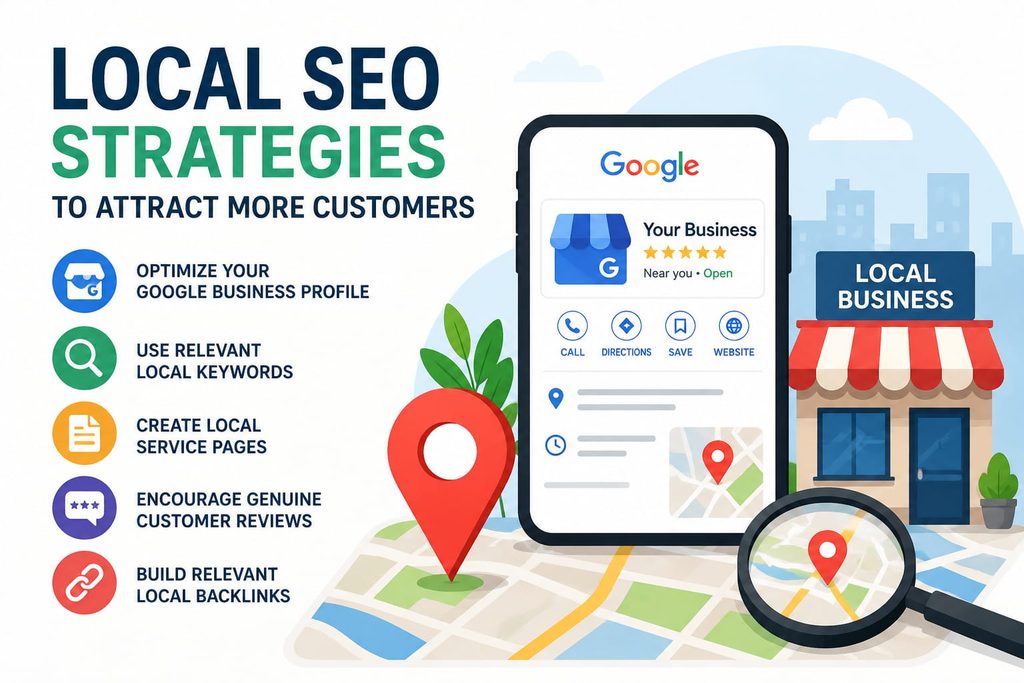
1. Optimize Your Google Business Profile
A Google Business Profile is one of the most important tools for local businesses. It allows businesses to provide useful information such as their business name, address, phone number, website, working hours, photos, and services.
A complete and accurate profile gives customers the information they need before contacting or visiting a business.
Important Details to Add
- Correct business name
- Accurate address
- Phone number
- Website URL
- Working hours
- Relevant business category
- High-quality photos
Businesses should also update their profile whenever important information changes.
2. Use Relevant Local Keywords
Local customers often include a location when searching for a service. For example, someone may search for “digital marketing agency in Delhi” instead of simply searching for “digital marketing agency.”
Using relevant location-based keywords can help businesses target customers in their service area.
These keywords can be used naturally in:
- Page titles
- Headings
- Service pages
- Meta descriptions
- Website content
- Image alt text
However, businesses should avoid repeating keywords unnecessarily. Content should always remain natural and useful for visitors.
3. Create Useful Local Service Pages
Businesses serving different areas can create dedicated pages for important locations. Each page should provide useful information instead of simply replacing one city name with another.
A strong local service page can explain the service, target location, customer benefits, and contact options.
For example, a digital marketing agency can create a page explaining its services for businesses in a particular city and describe how those services can help local companies.
4. Keep Business Information Consistent
Business information should be accurate and consistent across online platforms. Important details include the business name, address, and phone number.
If different websites show different information, customers may become confused and search engines may have difficulty understanding which information is correct.
Businesses should regularly check their information on:
- Website
- Google Business Profile
- Social media profiles
- Business directories
- Local listing websites
Consistent information helps create a more reliable online presence.
5. Encourage Genuine Customer Reviews
Customer reviews can strongly influence people when they are choosing a local business. Genuine positive reviews can show potential customers that others have had good experiences with the business.
Businesses can politely ask satisfied customers to leave honest feedback after using their products or services.
Good Review Practices
- Ask real customers for honest reviews
- Respond professionally to feedback
- Thank customers for positive reviews
- Address negative feedback respectfully
- Never create fake reviews
The main goal should be to provide excellent customer service and encourage genuine feedback.
6. Publish Local and Helpful Content
Creating useful local content can help businesses connect with their target audience. Instead of publishing only general articles, businesses can create content that answers questions related to their local market.
For example, a local agency could publish marketing tips for businesses in its city or create a guide explaining how local companies can improve their online presence.
Local content ideas include:
- Local business guides
- Industry tips
- Customer success stories
- Local service information
- Frequently asked questions
- Community-related content
Useful content can attract relevant visitors and demonstrate the business’s knowledge.
7. Make Your Website Mobile-Friendly
Many people use smartphones when searching for nearby businesses. If a website is difficult to navigate on a mobile device, visitors may leave without contacting the business.
A mobile-friendly website should have readable text, simple navigation, fast-loading pages, and easily accessible contact information.
Businesses should make sure that important elements such as phone numbers, contact forms, service details, and directions are easy to find.
8. Build Relevant Local Backlinks
Backlinks from trustworthy and relevant websites can support a business’s online presence. Local businesses can look for legitimate opportunities through local directories, industry organizations, community websites, local publications, and business partnerships.
The focus should be on relevance and quality rather than creating a large number of random links.
A few useful links from relevant websites can be more valuable than many low-quality links.
9. Use Local Business Schema
Local business schema helps search engines understand important information about a business. It can provide structured information about details such as the business type, location, contact information, and opening hours.
Businesses should ensure that structured data is accurate and matches the information displayed on their website.
10. Monitor Local SEO Performance
Local SEO requires regular monitoring and improvement. Businesses should track how their website and business profile are performing over time.
Important metrics can include:
- Website traffic
- Search visibility
- Customer calls
- Website inquiries
- Business profile interactions
- Search rankings
- Conversions
Analyzing these results can help businesses identify which strategies are working and where improvements are needed.
Why Choose a Professional Digital Marketing Agency?
Managing Local SEO requires keyword research, website optimization, content creation, business profile management, and regular performance analysis.
A professional digital marketing agency can create a customized strategy based on the business’s location, target audience, competition, and goals.
A digital marketing agency may provide:
- Local SEO
- Search Engine Optimization
- Website Development
- Content Marketing
- Social Media Marketing
- Google Business Profile Optimization
- Performance Reporting
With the right strategy, businesses can improve their local online presence and reach more relevant customers.
To learn more about our digital marketing services, visit our Contact page.
Conclusion
Local SEO can help businesses become more visible when nearby customers search for relevant products and services. Optimizing a Google Business Profile, using local keywords, creating useful content, collecting genuine reviews, maintaining consistent business information, and improving mobile usability can all support better local visibility.
Local SEO is not simply about adding location keywords to a website. It is about providing accurate information and a useful experience to customers who are looking for a business in their area.
With consistent optimization and valuable content, local businesses can attract more relevant visitors, generate inquiries, build customer trust, and create opportunities for long-term growth.
Helpful Resources
- Google Search Central – https://developers.google.com/search
- Google Business Profile Help – https://support.google.com/business
- Google Search Console – https://search.google.com/search-console
- Google Analytics – https://developers.google.com/analytics
Frequently Asked Questions (FAQs)
1. What is Local SEO?
Local SEO is the process of improving a business’s online presence to become more visible to customers searching for products or services in a specific location.
2. Why is Local SEO important for small businesses?
Local SEO helps small businesses reach nearby customers who are actively searching for relevant products or services.
3. What is a Google Business Profile?
A Google Business Profile allows businesses to manage information such as their business name, address, phone number, hours, photos, and reviews on Google.
4. Do customer reviews help Local SEO?
Genuine customer reviews can improve trust and influence potential customers when they are deciding which local business to choose.
5. Should I use location-based keywords?
Yes, relevant location-based keywords can help businesses target customers in their service area when they are used naturally.
6. Is a mobile-friendly website important for Local SEO?
Yes. Many local searches are performed on mobile devices, so a website should be easy to navigate and use on smartphones.
7. How long does Local SEO take?
Results vary depending on competition, website quality, location, existing online presence, and the consistency of optimization efforts.
8. Are local backlinks useful?
Relevant and trustworthy local backlinks can support a website’s authority and online visibility.
9. Can Local SEO increase customer inquiries?
Yes. Better local visibility can help more relevant customers discover a business and contact it.
10. Can a digital marketing agency manage Local SEO?
Yes. A professional agency can help with local keyword research, website optimization, business profile management, content creation, and performance tracking.